Maori remembers and draws Tooru at the cherry blossom park
Even If This Love Disappears From the World TonightMaori remembers and draws Tooru at the cherry blossom park in a scene that turns her long, deliberate search for a lost relationship into a living act of remembrance. Three years after declaring that she would remember everything, she recognizes Tooru through a memory sparked by the spring setting and completes a drawing that captures his expression as she knew it. The moment makes art both a consequence of recovery and a distinct record of intimacy: the image comes not from a photograph, but from having been there with him.
Background: A Life Recorded for Later
During her amnesia, Maori relies on a binder, a journal, and digital files to reconstruct a life she cannot remember. She reads the binder each morning, keeping to a bedtime of ten because the routine takes time; her mother has adjusted her own schedule to support it. The binder organizes important information with tabs, while Maori’s phone holds everyday notes and media. The system gives her a way to learn about herself, but its entries and files remain records of experience rather than experience itself.
Those records tell Maori that she has a boyfriend and direct her to a section about him and journal entries beginning on May 27. Later, a folder on her phone contains photographs and videos of Tooru Kamiya. One shaky video shows the twilight scenery as he pedals a bicycle and glances back at her; her own flirtatious voice and joyful reaction make visible the happiness that the written account describes. The video can recover the circumstances of an outing, but it does not give her access to the feeling of being with him.
After Tooru dies, Izumi Wataya and Keiko Nishikawa carry out his request to remove him from Maori’s records. Keiko offers to type the binder and journal into a computer and repair the passages from which he is removed. On the third morning after the funeral, Izumi transfers the edited digital journal and notes to Maori’s laptop, replaces her phone, and arranges for the missing messages to be explained as a failed data transfer. The intervention is intended to protect Maori while she remains vulnerable, but it also leaves her without the documentary traces that might identify Tooru.
The Long Search for Memory
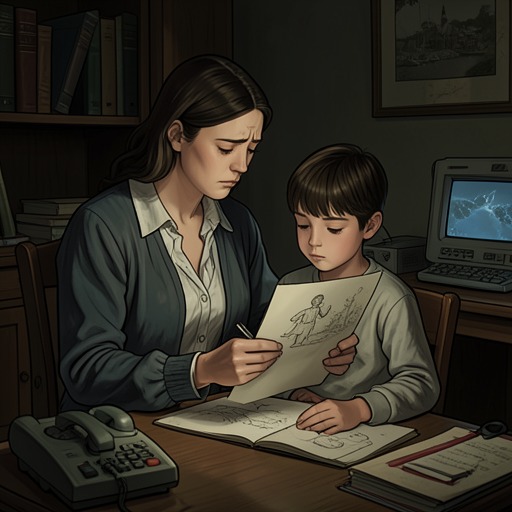
Once Maori has recovered from amnesia, Izumi sees no need to keep hiding the truth, believing Maori can bear the pain and that the risk of depression associated with her illness has passed. Yet when Maori asks about a drawing of Tooru, Izumi says he was merely someone Maori saw a couple of times at the library during high school summer vacation. The lie prolongs the erasure even after the reason for it has weakened. Izumi is unsure what is best, and imagines that Maori might eventually have a boyfriend or husband and cease to wonder about the sketches.
Maori’s own choice is different. After discussing the possibility that sorrow will soften with time, she tells Keiko that if everyone else is gradually forgetting Tooru, she wants to gradually remember him. She asks to recover what matters to her, while promising not to become captive to the past or neglect her life. Keiko warns that a future partner should be loved wholeheartedly and that Tooru should eventually be left behind; Maori agrees, but admits that she still does not know what to call the relationship described in her journal. Her aim is not to refuse the future, but to make room for a past that was taken from her.
For three years, Maori uses her journal and Izumi’s stories as guides, revisiting places and repeating activities she shared with Tooru. The effort does not work as simply as drinking Lady Grey tea, and remembrance comes only little by little. She continues to search inward even as university and adult life move forward. Izumi, now twenty-four and working, watches Maori’s ordinary present—talking happily with a friend—and wonders whether this peaceful, changing life is what Tooru wanted for her. The reunion with memory therefore occurs not outside daily life but within it, after years in which Maori has kept living while looking back.
The Cherry-Blossom Walk
In the spring scene, Izumi asks Maori to walk along a path lined with cherry blossoms so they can speak alone. Maori brings her sketchbook because she wants to draw the flowers. After their usual banter, Izumi asks what happened after that. Maori understands the question without asking what it means and offers the sketchbook; its pages hold landscapes, portraits, animals, and other drawings from her daily practice.
While looking through the book, Maori recalls Tooru’s explanation of May sickness: everyone is busy while the cherry blossoms fall, but in May life calms down. Her recovered fragment of conversation arrives as the pages turn, linking the seasonal image to a shared moment that words in the journal had only briefly recorded. The trigger is not a photograph placed before her, but the combination of conversation, spring, and the act of drawing beneath the blossoms.
Izumi then finds drawings of Tooru she has never seen. In the older sketches she had collected, he looks aside, smiles faintly, or frowns shyly; here, the pictures show him as Maori remembers him. Turning a page reveals him again, with the same expression, in a succession of carefully rendered versions. The drawings make his existence palpable to Izumi, who feels she can almost hear his familiar voice, but their source is Maori’s recovered perspective rather than a record made by someone else.
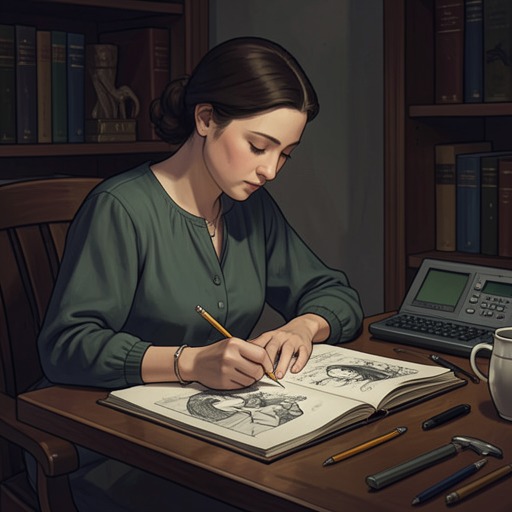
Maori asks for the sketchbook back, takes out a pencil, and begins drawing beneath the flowers in full bloom. Izumi watches her draw for the first time and is surprised by how quickly the forms take shape, though Maori has continued drawing every day, both while Tooru was alive and afterward. In minutes she roughs in a figure sitting beneath a cherry tree, then fills the outlines until Tooru comes into view: he is looking toward Izumi with the tenderness he showed at the day the three of them picnicked under the blossoms. A photograph or video has not preserved that look. The drawing can because Maori shared the moment with him.
Meaning and Aftermath
The drawing does not restore every memory at once. Maori says she has remembered something else about Tooru but is sure she has not remembered everything. Still sketching, she describes the memories as asleep within her body and heart: remembering him, she says, lets them continue living together. The language presents recovery not as a complete reversal of loss, but as a continuing bond that can coexist with Tooru’s absence and with a life still moving forward.
Maori cries without being certain why. She thinks she is still hurting, but feels warmth too, and believes she still loves him; she also believes she will fall in love again and reach for happiness. The scene holds grief and renewed possibility together rather than treating one as proof against the other. The people around Maori may forget Tooru, but her remembered expression of him remains available to her through drawing.
As the moment unfolds, Izumi recalls the time she spent with Tooru in a rush of memory and recognizes that everything changes and fades, yet some things remain. Maori’s drawings show Tooru smiling, watching over her with the kind eyes she remembers from that day. The ending makes the sketchbook more than a substitute for the photographs and videos Maori has resisted: it is a work produced through recovered feeling, preserving an aspect of Tooru that mechanical images could not convey. Beneath the cherry blossoms, memory returns not as a perfect archive but as a particular gaze, rendered by the person who was there.